Venomous Snakes in the US: Identification, Safety, and First Aid
The US has four main venomous snake groups. This guide covers identification, which species are most dangerous, first aid myths to avoid, and when to call 911.

Medical disclaimer: This article is general safety information, not emergency medical advice. Any suspected venomous snakebite needs urgent evaluation. Call 911 or go to an emergency department when in doubt.
Venomous snakes in the US are a real outdoor and yard hazard, but fatalities are rare when people get prompt care. Searchers ask about the most venomous snake in the us, most dangerous snake in us, and whether poisonous snakes united states lists differ from venomous ones.
This guide explains the four main US groups, how to tell pit vipers from coral snakes, what first aid actually supports, and what to skip.
What does venomous mean? Poisonous versus venomous snakes
Venomous animals inject toxin through a bite or sting. Poisonous animals harm you if you eat or touch them. Snakes discussed here are venomous, not poisonous in the food-safety sense.
Search phrases like poisonous snakes in america usually mean venomous snakes. We use both terms below where readers search them, but the biology is venom delivery through fangs.
What are the four main venomous snake families in the United States?
CDC and NIOSH group US medically important venomous snakes into four types:
- Rattlesnakes (many species, pit vipers)
- Copperheads (pit vipers)
- Cottonmouths (water moccasins, pit vipers)
- Coral snakes (elapids, distinct banding pattern)
Most venomous american snakes you will hear about in the lower 48 fit one of these groups.
How to tell pit vipers from coral snakes at a glance
| Trait | Pit vipers (rattlesnakes, copperheads, cottonmouths) | Coral snakes |
|---|---|---|
| Head shape | Triangular head, heat-sensing pits between eye and nostril | Small head, round pupils (hard to see at distance) |
| Pattern | Camouflage bands or blotches; rattles on many (not all) rattlesnakes | Red, yellow, and black rings (color order matters for ID) |
| Venom type | Often hemotoxic effects (tissue, bleeding, pain, swelling) | Neurotoxic risk (weakness, slurred speech, breathing trouble) |
| Typical habitat | Woods, rocky slopes, wetlands edges, yards in range | Southeastern and Gulf Coast sandy or wooded areas |
Rhymes like "red on yellow kills a fellow" are study aids, not substitutes for distance and local wildlife guides. When unsure, treat any snake as dangerous and back away.
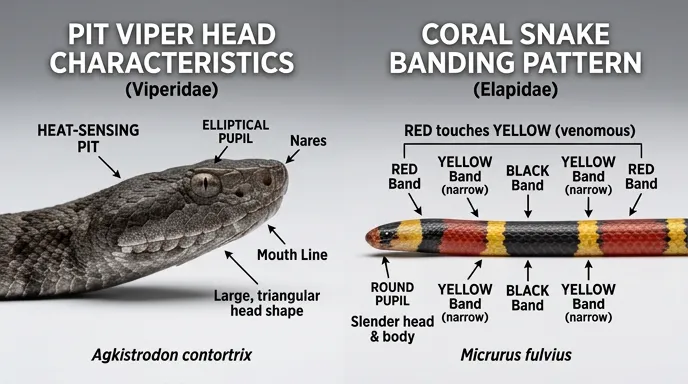
What is the most venomous snake in the US?
"Most venomous" usually means highest venom potency in lab tests, not the snake that kills the most people. The eastern coral snake and some rattlesnake species are often cited for potent neurotoxic or mixed venoms in their ranges.
For preparedness, potency matters less than encounter risk plus access to care. A common species in your county you meet on a trail can be more relevant than a rare desert rattlesnake you never see.
What is the most dangerous snake in the United States?
Most dangerous blends toxicity, bite frequency, and medical access. Rattlesnakes account for many US envenomation reports because of range and human overlap. Copperheads cause many bites that are painful but less often life-threatening with treatment.
So the answer to what is the most venomous snake in the united states and most deadly snake in north america depends on the metric you choose. Public-health pages emphasize identification and emergency care over rankings.
Which venomous snakes live in your state or region?
Venomous snakes in america are not evenly distributed:
- Southwest: multiple rattlesnake species
- Southeast: cottonmouths, copperheads, coral snakes, rattlesnakes
- Mid-Atlantic and Midwest: copperheads, timber rattlesnakes in patches
- Northeast: timber rattlesnakes in limited areas; copperheads in some states
- West Coast: rattlesnakes in drier and foothill zones
Check your state wildlife agency or NPS park pages before travel. Lists change slightly with taxonomy updates, but the four-group framework stays stable.
| Region (broad) | Species often present | Notes for hikers and homeowners |
|---|---|---|
| Desert Southwest | Rattlesnakes | Rock piles, dusk activity; watch step placement |
| Gulf and Southeast | Cottonmouths, copperheads, coral snakes, rattlesnakes | Wet edges, leaf litter, woodpiles |
| Appalachia | Copperheads, timber rattlesnakes | Forest trails, stone walls near homes |
What to do if you see a venomous snake
- Stop and give the snake space (most bites happen when people try to kill or handle snakes).
- Back away slowly; do not corner or provoke.
- Keep pets on leash in known range.
- Do not rely on killing the snake for ID; photos from a safe distance are enough for clinicians.
Snakebite first aid: evidence-based steps and dangerous myths
Do:
- Move away from the snake and call 911 or local emergency services.
- Keep the person calm and still; let them rest with the bitten limb at or below heart level if tolerated.
- Remove rings, watches, or tight clothing near the bite before swelling.
- Note time of bite and appearance of the snake only if it is safe (photo from distance).
- Go to an emergency department; antivenom decisions belong in hospital care.
Do not:
| Myth or bad advice | Why to avoid it |
|---|---|
| Tourniquets | Can worsen tissue injury; not recommended for US pit viper bites in standard guidance |
| Cutting or sucking the wound | Infection risk; does not remove meaningful venom |
| Ice or electric shock | Not effective; can damage tissue |
| Capturing or killing the snake for proof | Second bite risk; unnecessary if photo or description exists |
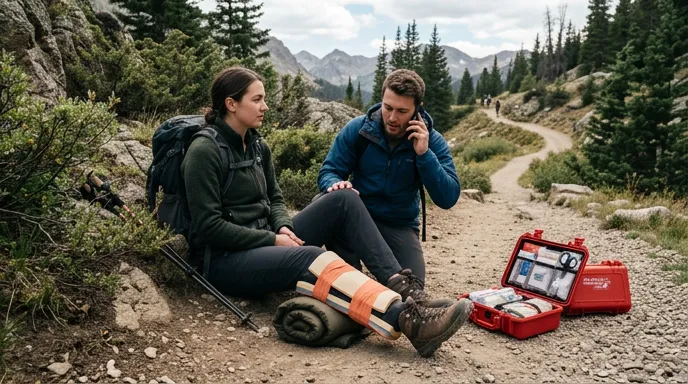
When to call 911 after a snakebite
Call 911 immediately if there is:
- Rapid swelling, severe pain, or spreading bruising
- Dizziness, fainting, or trouble breathing
- Slurred speech, drooping eyelids, or weakness (possible neurotoxic signs)
- Bite to face or neck
- Child, pregnant person, elderly patient, or anyone on blood thinners
- Any bite when snake species is unknown or suspected venomous
Antivenom in the US: types, availability, and side effects
US hospitals stock antivenom matched to major native pit viper and coral snake envenomation patterns. Clinicians choose product and dose based on exam and labs, not home treatment.
Antivenom can cause allergic reactions; that is one reason care stays in emergency settings. Do not delay transport hoping symptoms will pass.
How to prevent snake encounters at home and on the trail
- Clear yard debris, woodpiles, and tall grass near play areas.
- Seal gaps under sheds and use door sweeps where snakes enter structures.
- Use a flashlight on paths at dusk and dawn.
- Wear closed shoes on trails; avoid reaching into blind spots.
- Teach children to tell an adult instead of touching snakes.
- Know the number for local emergency services before remote hikes.
Who faces higher risk after a bite?
Children may receive a higher venom dose relative to body size. Older adults and people on anticoagulants may bleed more easily. Pregnant patients need urgent hospital assessment. Anyone with rapid systemic symptoms needs EMS, not watchful waiting at home.
Common myths about American venomous snakes
- Myth: Every rattlesnake bite is instantly fatal. Reality: Many bites are treatable with modern care; outcomes depend on species, venom dose, and time to treatment.
- Myth: Baby snakes are always more dangerous. Reality: Any venomous snake can envenomate; avoid handling all sizes.
- Myth: You must kill the snake for the hospital. Reality: Clinical care does not require a dead snake.
Quick ID chart and printable safety checklist
Before you go out: know local species, carry a charged phone, wear boots, tell someone your route.
If you see a snake: stop, back up, do not handle.
If bitten: call 911, keep still, remove tight jewelry, go to the ER, skip tourniquets and cutting.
FAQ
What is the most venomous snake in the US?
Lab potency rankings often highlight coral snakes and certain rattlesnakes, but the practical focus should be local species risk and fast emergency care.
What is the most dangerous snake in the United States?
Rattlesnakes are involved in many serious envenomations because of range and encounters. "Dangerous" should include how often people meet the snake, not venom alone.
Are there poisonous snakes in the United States?
Readers usually mean venomous snakes. The US has four medically important venomous groups, not snakes that poison you by touch alone.
What are the most venomous snakes in North America?
The US four-group list covers most lower-48 risk. Mexico and Central America add other species outside this article's US focus.
How likely is a US snakebite to be fatal?
Fatalities are uncommon with prompt care. Delayed treatment, allergic reactions, and rare high-dose bites raise risk.
How do I identify venomous American snakes?
Learn pit viper versus coral snake traits, use regional field guides, and keep distance. Do not rely on rhymes alone.
What should I do if bitten by a venomous snake in the US?
Call 911, keep the person still, remove tight items near the bite, and go to an emergency department. Do not cut, suck, or tourniquet the wound.
References
- Types of Venomous Snakes (Centers for Disease Control and Prevention, NIOSH)
- Venomous Snakes (outdoor workers) (Centers for Disease Control and Prevention, NIOSH)
- Venomous Snakebites in the United States: Management Review (American Academy of Family Physicians)
- Cottonmouth snake bites reported to the ToxIC North American Snakebite Registry (PubMed, NIH)
- The T's of snakebite injury in the USA: fact or fiction? (PubMed Central, NIH)
- Venomous Snakes (National Park Service)