Onions in Your Socks: Folk Remedy, Myth, or Mild Comfort Hack?
Putting onions in your socks is a viral folk remedy, not proven cold or flu treatment. Here is what it can and cannot do, how to try it more safely, and what actually helps at home.

Medical disclaimer: This article is general information only. It is not medical advice, diagnosis, or treatment. For fever, breathing trouble, diabetes foot problems, or symptoms that worry you, contact a clinician or urgent care. Do not use onion in socks instead of proven care when you are seriously ill.
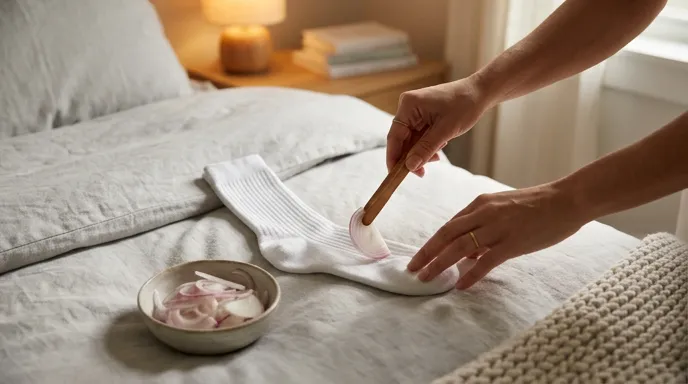
Onions in your socks is a home ritual that keeps resurfacing online: slice a raw onion, tuck it against the soles of your feet, pull on socks, and sleep. Searchers ask what does onions in your socks do, does onion in sock work, and why do people put onions on their feet at night.
The honest short answer: there are no good clinical trials showing onion-in-sock treats colds, flu, or detox. Major public-health guidance focuses on rest, fluids, humidifiers, saline, and medical care when needed. This guide explains the folk story, what science actually supports, and how to think about risk if you still want to try it.
What does onions in your socks mean?
The onion in the sock remedy usually means raw onion (often yellow or white) placed on the plantar surface of the foot, covered with cotton socks overnight. Variants include onions under your feet without socks, multiple layers of onion, or alternating onion types.
Social posts sometimes claim it "draws toxins," boosts immunity, or cures cough overnight. Those claims go far beyond what foot skin can do.
Why do people put onions on their feet at night?
The idea blends old folk medicine, reflexology-style foot maps, and modern wellness influencers. Some blogs cite traditional Chinese medicine pathways through the feet. Others repeat wartime or Great Depression stories about onions in sickrooms.
Today the habit spreads because it is cheap, dramatic, and easy to film. Comfort rituals can feel helpful even when they are not curing infection.
What does putting onions in your socks do?
Proponents say overnight contact lets onion compounds enter the body, fight viruses, or purify blood. Consumer-health reviewers and fact-checkers consistently report:
- No proof that onion in sock shortens colds or flu.
- No credible mechanism for foot skin to "detox" organs overnight.
- Possible mild effects: warmth from socks, strong smell, ritual that encourages rest and fluids (placebo or comfort, not antiviral therapy).
Does onion in sock work for colds or flu?
No, not in the medical sense. Controlled studies on sleeping with onions in socks for respiratory illness are essentially absent. CDC-oriented cold guidance emphasizes supportive care, not foot onions.
Eating onions as part of meals is fine for many people and provides nutrients in food form. That is not the same as applying raw onion to feet and expecting systemic treatment.
How onion compounds work in food versus on skin
| Route | What happens | Evidence for cold or flu |
|---|---|---|
| Eaten in meals | Digestion, nutrients, flavor; possible mild metabolic effects in some studies of diet patterns | Not a cure; general nutrition only |
| Raw onion on skin | Irritation, odor, possible local reaction; poor systemic absorption through intact foot skin | No proven antiviral effect from socks ritual |
| Onion in room air | Smell only; does not sterilize air or stop viruses | Myth per infectious-disease reviewers |
What science says about skin absorption through the feet
Intact skin is a barrier. The soles are thicker than many body areas. Small molecules can sometimes penetrate under specific clinical conditions (transdermal patches are engineered for that). A slice of grocery-store onion is not a designed drug delivery system.
Claims that onions "pull toxins" into the sock or purify blood are not supported by physiology. Discolored sock or onion in the morning reflects moisture and plant chemicals, not proof of detox.
How home colds and flu really clear up
Most mild viral respiratory illnesses improve with time and supportive care:
- Rest and sleep
- Fluids (water, broth, electrolyte drinks if needed)
- Saline nasal rinses or sprays for congestion
- Cool-mist humidifier in dry rooms
- Honey for cough in adults and children over 1 year (not for infants under 12 months)
- Over-the-counter symptom relievers when appropriate and label-safe for your age and health conditions
- Prescription antivirals for flu when a clinician recommends them early in illness
| Approach | Evidence level for mild cold or flu |
|---|---|
| Rest, fluids, humidifier, saline | Standard supportive care (public-health aligned) |
| Onions in socks overnight | No clinical proof of treatment benefit |
| Foot detox or meridian "cleansing" | Not supported as medical science |
A safer way to try onions in your socks at home
If you treat this as a low-risk comfort experiment, not medicine, consider these steps:
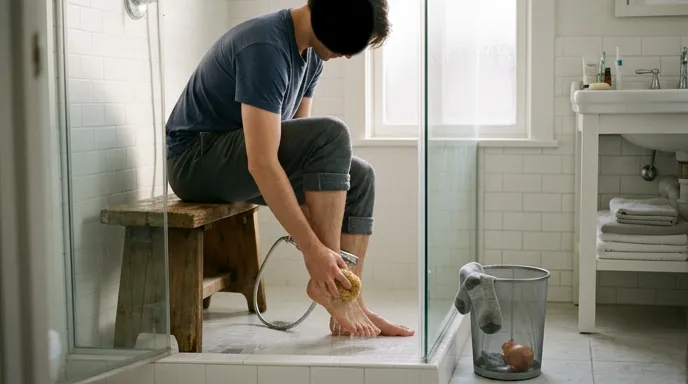
- Patch test first: Hold a small onion slice on your inner wrist or foot for 10 to 15 minutes. Stop if burning, rash, or blistering appears.
- Use fresh, clean onion and wash your feet. Trim nails; skip if you have open cuts or athlete's foot sores.
- Thin slices only; avoid thick wedges that macerate skin.
- Clean cotton socks; not tight compression socks unless your clinician already approved them.
- Limit time: try one to two hours awake first before a full night.
- Stop immediately for odor intolerance, skin redness, pain, or any foot numbness concern.
- Wash feet well afterward and moisturize if skin feels dry or irritated.
When to skip onions in your socks and call a doctor
Do not rely on this remedy if you have diabetes, peripheral neuropathy, poor circulation, pregnancy complications, or immune suppression. Foot skin injuries are higher stakes in those groups.
Seek medical care promptly for:
- Fever of 103°F (39.4°C) or higher, or fever lasting more than three days in adults
- Shortness of breath, chest pain, or confusion
- Severe sore throat with trouble swallowing or breathing
- Symptoms improving then returning with high fever
- Foot wounds, ulcers, or loss of sensation
- Any symptom in an infant under 3 months with fever
Common mistakes people make with this remedy
- Using onion in socks instead of flu testing or antivirals when indicated
- Leaving wet plant material on feet all night with diabetes or broken skin
- Assuming blackened onion means toxins left the body
- Applying to children without pediatric guidance
- Ignoring worsening cough, wheeze, or dehydration
Onions on your feet: detox myth or placebo comfort?
Detox through feet is a myth in the way wellness posts describe it. Your liver and kidneys handle normal metabolic waste. Socks with onion do not replace those systems.
A placebo or ritual effect is possible: you rest earlier, drink tea, and feel you "did something." That can lower stress without proving antiviral action. Be honest about that distinction, especially when caring for others.
How to decide when it might be harmless versus risky
Lower concern: healthy adult, intact foot skin, short trial, no serious symptoms, still using proven cold care.
Higher concern: diabetes, open sores, significant fever, breathing issues, pregnancy, or delaying clinician advice. In those cases, skip the onion entirely.
Natural onion-based supports that are better backed
- Onion and vegetables in soups and meals while you are sick (comfort and nutrition)
- Steam from hot broth for temporary congestion relief (careful with burns)
- Proven symptom tools your pharmacist or clinician recommends for your situation
Onions under your feet: what to expect overnight
Expect a strong smell on skin and bedding. The onion may look wilted or brown. Your feet may feel damp. None of that confirms a cure. If morning brings only odor and no improvement in fever or cough, you have not treated the virus. Continue evidence-based care and monitor symptoms.
FAQ
What does onions in your socks do?
Mostly adds odor and moisture against the skin. It is not proven to treat cold, flu, or detox. Any benefit is likely comfort, ritual, or placebo, not antiviral therapy.
Does onion in sock work for colds or flu?
No reliable clinical evidence says it works. Use rest, fluids, humidifiers, saline, and medical care when symptoms are moderate or severe.
Why do people put onions on their feet at night?
Folk tradition, foot-reflexology ideas, and social media trends. The practice is old in story but new in viral "detox" packaging.
What does putting onions on your feet do besides smell?
There is no proven systemic health effect from overnight foot contact. Possible skin irritation is the main physical outcome for some people.
Is it safe to sleep with onions in your socks?
Some healthy adults tolerate a short trial with clean skin and no diabetes foot issues. It is not recommended as therapy, and it is a poor idea when you have open sores, neuropathy, or serious illness.
Are onions on your feet a real detox or cleanse?
No. Fact-checkers and medical reviewers classify detox claims for this remedy as unsupported.
What should I do instead of putting onions in my socks for a cold?
Rest, hydrate, use saline and a humidifier as needed, consider age-appropriate over-the-counter relief, and call a clinician if symptoms are strong or persistent.
References
- Preventing and Managing Common Cold (fact sheet) (Centers for Disease Control and Prevention)
- Prairie Fare: Follow the CDC's 3 Actions to Fight the Flu (North Dakota State University Extension)
- Onion in Sock: Cold and Flu Treatment (Healthline)
- Onion in sock for cold and flu treatment: Does it work? (Medical News Today)
- No, placing onions under your feet won't cure a cold or flu (Africa Check)
- Does an Onion in the Room Stop a Cold or Flu? (Verywell Health)
- Fact Check: Can putting onion in socks cure cold and flu? (THIP Media)
- Sleep with onions on your feet: Viral detox hack (The Indian Express)
- No medical evidence that placing raw onion on the soles cures cold (Logically Facts)
- Onions in your socks? Unpeeling this flu myth (Fox News)