How to Tell If Vacuum Sealed Meat Is Bad: Signs, Safety Checks, and When to Throw It Out
Vacuum sealing can extend meat storage, but it does not make meat immune to spoilage or botulism risk. Use this checklist for smell, seal, texture, time, and safe thawing.

Food safety note: This article is general household guidance, not medical advice. When you are unsure whether meat is safe, follow the common rule: when in doubt, throw it out. People who are pregnant, older adults, young children, or immunocompromised should discard questionable food rather than taste and see. Botulinum toxin cannot be seen, smelled, or tasted.
Vacuum sealed meat can look pristine while quality or safety is slipping. The bag removes most oxygen, which slows some spoilage but also changes which microbes can grow and can make off odors less obvious until you open the package.
This guide answers how to tell if vacuum sealed meat is bad with a practical inspect, smell, texture, time, and temperature flow. It also covers defrosting vacuum sealed meat botulism concerns, especially for fish in reduced-oxygen packaging.
What vacuum sealing changes about meat
Vacuum sealing (also called reduced-oxygen packaging) limits air around the product. That can:
- Slow oxidation and freezer burn in the freezer.
- Delay some spoilage bacteria and mold in the refrigerator.
- Change odor cues because certain aerobic spoilage microbes grow more slowly.
It does not sterilize meat, kill all pathogens, or replace cold storage. Meat still needs refrigeration or freezing, safe handling before sealing, and respect for use-by or freeze-by dates on the label.
How to tell if vacuum sealed meat is bad at first glance
Before you smell or cook anything, check the package and clock:
- Seal integrity: Is the film tight and fully adhered, or are corners lifting, holes present, or liquid leaking?
- Package shape: Is the bag unusually puffy or ballooned? That can mean gas-producing spoilage or, in rare cases, serious safety issues with reduced-oxygen foods held too warm.
- Color through the film: Gray-brown patches, greenish tints, or extreme darkening can signal spoilage, though some color change is normal for certain cuts.
- Ice crystals or freezer burn: In the freezer, heavy ice inside the bag or desiccated edges mean quality loss. Discard if the meat looks dried out or has been thawed and refrozen without your knowledge.
- Time and temperature: Was the product kept at or below 40°F (4°C) in the fridge, or frozen solid? Meat left out more than two hours (one hour above 90°F / 32°C) should be discarded.
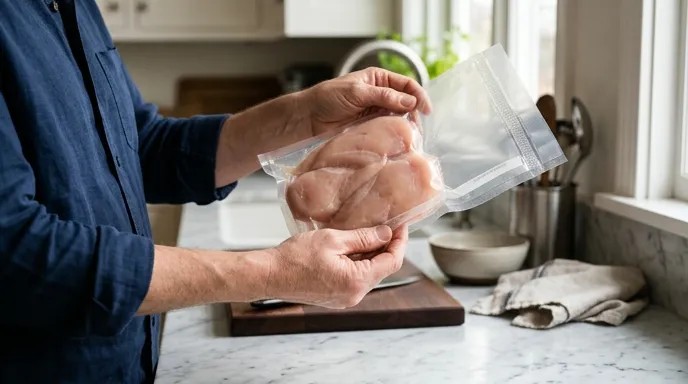
What normal smell is, and what bad smell means
Some vacuum packed meat releases a brief confined odor when first opened. That smell often fades within minutes as volatile compounds dissipate. If the odor stays strong, sour, ammonia-like, sulfurous, or rotten after airing a few minutes, treat the meat as spoiled.
| What you notice | Likely meaning | Action |
|---|---|---|
| Mild metallic or confined smell that fades quickly after opening | Often normal packaging odor for some products | Re-check texture and time; cook promptly if other signs are fine |
| Strong sour, rotten, or ammonia odor that persists | Spoilage likely | Discard; do not taste |
| No odor but swollen, leaking, or time-temperature abused package | Cannot rule out toxin risk in reduced-oxygen foods | Discard without tasting |
Does slimy or sticky texture always mean spoilage?
A slimy, tacky, or sticky film on raw meat, especially poultry, is a common spoilage sign. A little moisture in the bag is not always dangerous, but persistent slime, mushy texture, or tackiness that does not rinse off with cold water means throw the meat out.
Cooked vacuum sealed meat should feel firm and typical for the product. Unusual stickiness, gas pockets, or separation with sour odor means discard.
How long vacuum sealed meat lasts in the fridge
Exact days depend on species, freshness at purchase, and your refrigerator temperature. Use label dates first. These ranges are planning guides for commercial vacuum packed retail meat held at 40°F (4°C) or below:
| Product | Typical refrigerator window (unopened, sealed) |
|---|---|
| Beef, pork, lamb (steaks, roasts) | Often several days to about 2 weeks from pack date if label allows; follow package use-by |
| Ground meats | Shorter; often 1 to 2 days beyond purchase unless label states longer |
| Poultry (whole or parts) | Often 1 to 2 weeks unopened per label; use sooner after opening |
| Fish and seafood | Short; often 1 to 3 days unless label specifies longer; follow fish-specific label |
After opening the vacuum bag, treat meat like any other raw product: use poultry within 1 to 2 days, ground meat within 1 to 2 days, and steaks or chops within 3 to 5 days unless your label says otherwise.
How long vacuum sealed meat lasts in the freezer
Freezing pauses microbial growth but does not improve quality forever. For best flavor:
- Ground meat: often best within 3 to 4 months frozen.
- Steaks and chops: often 4 to 12 months depending on fat content and freezer quality.
- Poultry: often up to about 1 year if well frozen.
- Fish: often 2 to 6 months for quality; follow label freeze-by.
Keep the freezer at 0°F (-18°C) or below. Vacuum sealing reduces freezer burn but does not make meat safe if it thawed on the counter or sat in a warm car.
What a broken, puffed, or leaking seal means
Discard vacuum sealed meat when:
- The seal failed or the bag was punctured before you bought it.
- The package is swollen or leaking purge (liquid) with off odor.
- You see mold inside the bag or on the product.
- The meat was stored above safe refrigerator temperature for unknown time.
Do not re-vacuum seal meat that may already be spoiled. Start with fresh product and clean equipment if you home vacuum seal.
How to tell if vacuum sealed beef, pork, chicken, or fish is bad
Beef and pork: Persistent sour or rotten odor, sticky slime, greenish surface film, or gray-green discoloration under bright light are discard signs.
Chicken and turkey: Slimy texture, gray or yellowing color, and strong sour or sulfur smell mean throw it out. Poultry spoils faster than large cuts of red meat.
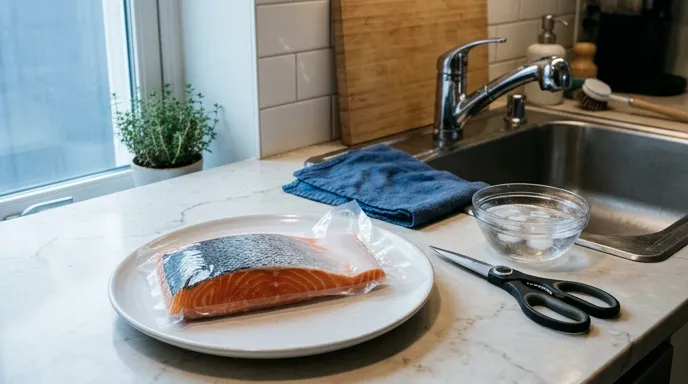
Fish: Fishy is normal to a point, but ammonia-like, overpowering fishiness, dull sunken flesh, or milky liquid with strong odor means discard. Fish in vacuum or modified atmosphere packaging often has stricter thawing rules than red meat (see below).
How to tell if vacuum sealed meat is bad after thawing
Thawing should happen in the refrigerator, in cold water (bag sealed in another leak-proof bag, water changed every 30 minutes), or in the microwave if you will cook immediately afterward. After thaw:
- Check for the same odor, slime, and color rules as fresh meat.
- If the meat was thawed in the refrigerator and still cold, you can refreeze raw meat if quality is acceptable, though texture may suffer.
- If it thawed on the counter or feels warm, discard it.
Defrosting vacuum sealed meat, botulism risk, what matters most
Botulism is a rare but serious illness from botulinum toxin. Certain bacteria can grow in low-oxygen environments when temperature and time are wrong, especially in some reduced-oxygen packaged foods held without adequate cold control.
Key points for consumers:
- Keep vacuum sealed meat refrigerated or frozen until use.
- Do not leave vacuum packed perishable foods at room temperature to thaw for long periods.
- Botulinum toxin cannot be seen, smelled, or tasted. Swollen, damaged, or suspect reduced-oxygen packages should be discarded.
- Home vacuum sealing without proper controls is higher risk than commercial packing with regulated processes.
Scientific reviews of chilled vacuum packed red meat note that risk management depends on species, packaging, temperature, and shelf life controls. At home, your job is simpler: keep it cold, respect dates, and discard abnormal packages.
Is it safe to thaw vacuum sealed meat in the bag?
For many beef, pork, and poultry products sold in vacuum film rated for sous-vide or cold thaw, refrigerator thawing in the unopened bag can be acceptable if the label does not warn otherwise. Always read the package instructions.
For fish in vacuum or modified atmosphere packaging, many state extension services recommend opening the package before thawing unless the label explicitly allows in-bag thaw. Reduced-oxygen fish packaging has different risk profiles than most red meat retail packs.
| Thaw method | Typical use | Safety notes |
|---|---|---|
| Refrigerator | Best default | Plan ahead; keep at 40°F (4°C) or below |
| Cold water | Faster thaw | Keep meat in a leak-proof bag; cook soon after |
| Microwave | Same-day cooking | Cook immediately; some areas may start to cook |
| In-bag refrigerator thaw | Some vacuum packed red meats and poultry | Follow label; open fish packs when extension or label says so |
| Countertop | Not recommended | Discard if perishable meat sat out too long |
Why vacuum sealed fish needs extra caution
Retail fish in vacuum or modified atmosphere packaging may support different microbe patterns than red meat when temperature control slips. Extension guidance in several states emphasizes:
- Keep fish cold from store to home.
- Observe sell-by or use-by dates.
- Open the package before thawing when instructions or extension publications require it, so oxygen returns before full thaw in some products.
- Cook fish to the recommended internal temperature (typically 145°F / 63°C for fin fish per USDA guidance).
If you are unsure about a specific brand of vacuum packed fish, follow the label and your state extension service rather than generic red-meat thaw habits.
When odor is normal after opening and when it is not
A short-lived confined smell that disappears within about 10 to 30 minutes while the meat still looks and feels normal is different from odor that:
- Gets stronger as the meat rests.
- Returns immediately after rinsing.
- Comes with slime, gas, or off colors.
If you need to debate whether the smell is only a little weird, you are already in throw-it-out territory for high-risk households.
What not to do with questionable vacuum sealed meat
- Do not taste raw or undercooked questionable meat to check safety.
- Do not rely on cooking alone to fix meat that was temperature-abused for hours.
- Do not thaw vacuum packed fish in the sealed bag when the label or extension guidance says to open it first.
- Do not use swollen or leaking reduced-oxygen packages.
When to throw it out without tasting it
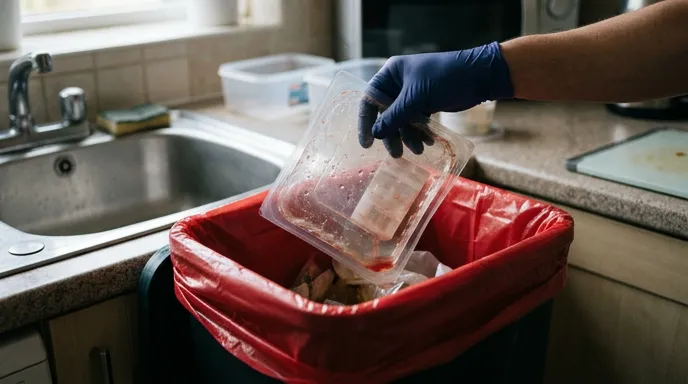
Discard immediately if any of the following apply:
- Persistent rotten, sour, or ammonia odor after airing.
- Slime, stickiness, or unusual mushy texture.
- Swollen, leaking, or clearly failed vacuum seal on a perishable product.
- Unknown time above safe refrigerator temperature.
- Past use-by date on fresh raw meat, especially ground meat and fish.
- Any doubt combined with pregnancy, age over 65, or weakened immunity in the household.
When to seek medical help after possible food poisoning
Contact a clinician for severe vomiting, bloody diarrhea, high fever, dehydration, or symptoms lasting more than a few days after eating suspect food.
Seek urgent care for possible botulism: blurred or double vision, drooping eyelids, dry mouth, trouble swallowing or speaking, muscle weakness, or breathing difficulty. Mention what you ate and when. Botulism is a medical emergency.
FAQ
How to tell if vacuum sealed meat is bad when it smells odd but not rotten?
Let it air on a clean plate for 10 to 30 minutes. If the odor fades and there is no slime, discoloration, or seal damage, cook it promptly to the correct internal temperature. If odor stays strong or texture is off, discard it.
Is it normal for vacuum sealed meat to smell bad when opened?
A brief confined smell can be normal for some products. Persistent rotten, sour, or ammonia-like odor is not normal.
Can vacuum sealed meat be slimy and still be safe?
Usually no for raw poultry and most raw meats. A little moisture is not the same as a tacky slime layer. When in doubt, throw it out.
What does a broken vacuum seal mean for meat safety?
Air and microbes can enter. If the product is perishable and was warm or old, discard it. If it was just frozen and the tear is small with no odor issues, still use caution and follow label guidance.
Is defrosting vacuum sealed meat botulism a real risk?
Botulism is rare but serious. Risk rises when reduced-oxygen foods are held without proper refrigeration or thawed incorrectly, especially some fish products. Keep meat cold and follow label and extension thaw instructions.
Should you thaw vacuum sealed meat in the package?
Sometimes for labeled beef, pork, or poultry in the refrigerator. For many fish products, open the package before thawing unless the label says otherwise.
Why does vacuum sealed fish have stricter thawing guidance?
Fish in reduced-oxygen packaging can have different microbe and temperature requirements than red meat. State extension services publish fish-specific open-before-thaw guidance.
When should you throw vacuum sealed meat away immediately?
When you see persistent bad odor, slime, swelling, leaking, failed seal, temperature abuse, or any doubt for high-risk eaters.
References
- Prevent Botulism (CDC)
- Home-Canned Foods | Botulism (CDC)
- The Big Thaw: Safe Defrosting Methods (USDA FSIS)
- Vacuum-sealed food: What are the food safety concerns? (Michigan State University Extension)
- Thawing vacuum-packed fish correctly (Michigan State University Extension)
- Storing and Thawing Vacuum-Packaged Fish (Wisconsin DATCP)
- Assessment of the risk of botulism from chilled vacuum packed fresh meat (PubMed)
- Vacuum and Modified Atmosphere Packaged Fish (Oregon State University)
- Botulism and Vacuum Packed Food (Hong Kong Centre for Food Safety)
- Assessment of the risk of botulism from chilled vacuum packed fresh beef, lamb and pork (ScienceDirect)