How Long Is Food Good in a Fridge Without Power? Fridge, Freezer, and Safety Rules
A power outage stops cooling, but a closed fridge and freezer still buy time. Use clear hour limits, the 40°F rule, and discard lists so you know what to keep and what to throw out.

Food safety note: This article is general household guidance, not medical advice. Public health agencies stress that you cannot rely on smell, color, or taste alone after an extended outage. When in doubt, throw it out. If anyone develops severe vomiting, diarrhea, fever, or signs of dehydration after eating food you were unsure about, seek medical care promptly.
When the lights go out, the first practical question is simple: how long is food good in a fridge without power, and how does that compare with the freezer? The answer depends on whether doors stay closed, how full the freezer is, room temperature, and whether food ever climbed above 40°F (4°C) for too long. This guide separates three ideas that are easy to mix up: how long the appliance stays cold, how long frozen food can stay safe, and when refrigerated perishables must be discarded.
What happens when your refrigerator loses power
Your refrigerator and freezer are insulated boxes, not chillers that run on stored electricity. When power stops, compressors turn off and cold air inside slowly warms. Warm kitchen air, frequent door openings, and a thin ice layer in the freezer all shorten safe hold times.
Perishable foods in the refrigerator section (meat, poultry, fish, eggs, milk, soft cheese, cooked leftovers, and many ready-to-eat items) are the first concern. Frozen foods can remain safe longer if packages stay at or below 0°F (-18°C) or still contain ice crystals, but partial thawing changes texture and refreeze rules.
Plan on acting with a clock and a thermometer, not with guesswork. Keeping doors closed is the single most effective step during the outage.
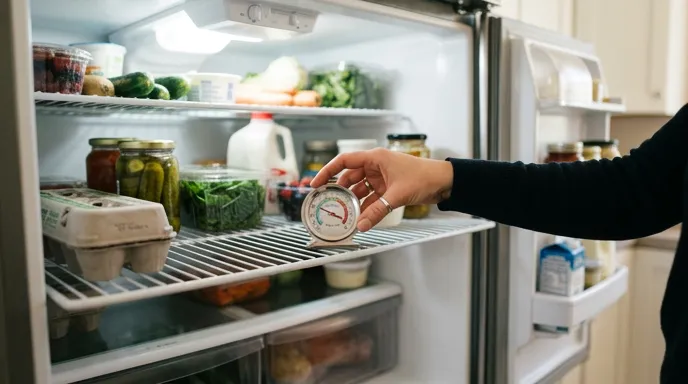
How long will a fridge stay cold without power
With the door kept closed, a typical refrigerator compartment will often hold a reasonably cold temperature for about four hours, according to U.S. food safety guidance. That is not a guarantee for every model or every kitchen. A packed fridge, a hot room, or repeated peeking can warm the interior much sooner.
The freezer compartment or a separate upright freezer behaves differently because frozen food acts as ice packs. A full freezer may hold a safe temperature near 0°F (-18°C) for about 48 hours if the door stays shut. A half-full freezer may last about 24 hours under the same conditions.
| Appliance (door closed) | Typical cold-hold guidance | What it means for you |
|---|---|---|
| Refrigerator section | About 4 hours before interior warmth is a concern | Plan to check temperature before opening repeatedly |
| Full freezer | About 48 hours | Frozen items may still be safe if packages remain icy |
| Half-full freezer | About 24 hours | Add freezer packs or ice ahead of storm season if possible |
How long is food good in a fridge without power
Food safety is about temperature over time, not the number of hours since the outage started. If refrigerated perishable food stays at or below 40°F (4°C), it may still be safe for a limited period. Once it has been above 40°F for more than two hours (or one hour if the surrounding temperature is above 90°F / 32°C), public health agencies advise discarding it.
That two-hour window is why a four-hour “cold box” estimate does not mean food is automatically safe for four hours. If the interior crossed 40°F early, the discard clock may already be running.
How long can food last in a fridge without power if the door stays closed
Closing the door preserves cold air. Every opening lets warm air in and can push perishables into the danger zone faster. Treat the door like a sealed emergency cooler: decide what you need, grab it quickly once, and close it again.
If you expect a long outage, note the time power went out and avoid opening the refrigerator until you can check an appliance thermometer. If you must open it, group tasks (for example, moving high-risk items into a cooler with ice) in one short session.
The 40 degree F rule: when food is no longer safe
The 40°F (4°C) line separates safe cold holding from temperatures where bacteria that cause foodborne illness can multiply quickly. Your freezer should be 0°F (-18°C) or below for long-term storage.
After an outage, ask two questions for refrigerated items:
- Did the food stay at or below 40°F (4°C)?
- If it rose above 40°F, was it there for two hours or less (one hour if ambient heat is above 90°F)?
If you cannot answer both confidently, discard perishable refrigerated foods. Do not use taste, odor, or appearance as the final test after extended warmth.
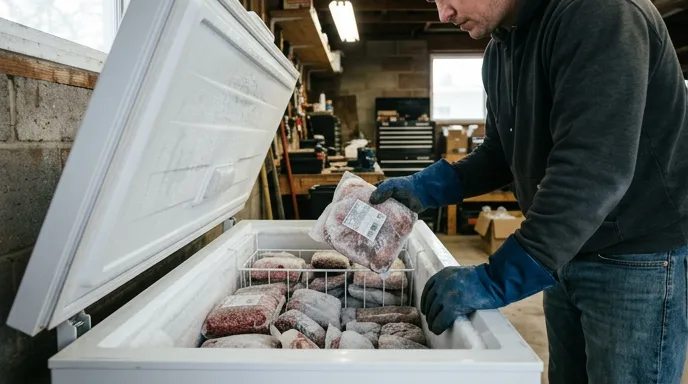
How long will food keep in the freezer without power
Frozen food remains safe while it stays at 0°F (-18°C) or below, or while packages still contain ice crystals and feel refrigerator-cold (40°F or below) throughout. The common planning numbers with a closed door are about 48 hours for a full freezer and about 24 hours for a half-full freezer.
Food that has thawed completely and warmed above 40°F for two hours or more should be discarded unless it was held in a cooler with ice and verified cold. Quality may suffer even when refreezing is allowed.
| Storage zone | Door closed: typical hold time | Safe food rule of thumb |
|---|---|---|
| Refrigerator | Appliance may stay cool ~4 hours | Discard perishables above 40°F for >2 hours (1 hour if >90°F ambient) |
| Full freezer | ~48 hours | Safe if still 0°F or ice crystals present; evaluate refreeze rules |
| Half-full freezer | ~24 hours | Same as full freezer; less thermal mass so warm faster |
How long will meat last in a freezer without power
Raw meat, poultry, and fish follow the same freezer hold times as other frozen foods: safety depends on staying frozen or cold enough, not on the protein type alone. A closed, full freezer gives the longest margin. Ground meat and small cuts thaw faster than large roasts because of surface area.
If meat is still rock-solid with ice crystals, it may be refrozen with some quality loss. If it is soft, leaking, or above 40°F for more than two hours, discard it. Never taste raw or cooked meat to decide whether it is safe after an outage.
Full freezer versus half-full freezer: how long cold lasts
A full freezer has more frozen mass to absorb heat, so it warms more slowly than a half-empty one. Before storm season, you can fill gaps with containers of water (leave headspace for expansion) so frozen blocks act as backup ice packs.
Organize the freezer so you can find items quickly when power is limited. Label and date packages when possible so you discard older product first after power returns.
Can you refreeze thawed food after an outage
You may refreeze some thawed foods if they still contain ice crystals or if a thermometer shows they never rose above 40°F (4°C). Refreezing is a safety decision first and a quality decision second. Texture, moisture loss, and flavor often decline after partial thaw.
Discard thawed items that are warm to the touch, above 40°F for two hours or more, or that show spoilage signs (off odor, sliminess, or unusual color) even if refreezing might seem wasteful.
What to throw out after a power outage
Discard refrigerated perishables that stayed above 40°F (4°C) for more than two hours, or one hour in very hot conditions. High-risk items include meat, poultry, seafood, eggs, milk, soft cheeses, deli meats, cooked leftovers, creamy desserts, and cut produce.
| Usually discard after unsafe warmth | May keep if still cold (40°F or below) and unspoiled |
|---|---|
| Raw meat, poultry, fish, eggs, milk, soft cheese | Hard cheese, whole fruits and vegetables (rinse before use) |
| Cooked leftovers, casseroles, pasta salads with dairy or meat | Commercially canned goods (inspect dents and swelling) |
| Opened deli meats, hummus, soft spreads | Unopened shelf-stable jars until opened and refrigerated |
| Thawed seafood or poultry above 40°F for >2 hours | Frozen items with ice crystals that read 40°F or below |
| Any food with off odor, slime, or unusual color | Foods verified cold with a thermometer, eaten promptly |
When in doubt, throw it out. The cost of discarded food is lower than the cost of illness, especially for vulnerable household members.
How to check food safely without tasting questionable items
Use an appliance thermometer in the refrigerator and freezer. Check the warmest part of the compartment (often the door area on refrigerators). For individual packages, probe thick portions without leaving the door open longer than necessary.
Look for ice crystals in frozen foods, liquid pooling in meat trays, swollen or leaking packages, and unusual odors after opening. None of these tests alone proves safety after long warmth, but they support a discard decision. Do not taste food to see if it is still good.
Dry ice, block ice, and coolers to extend cold time
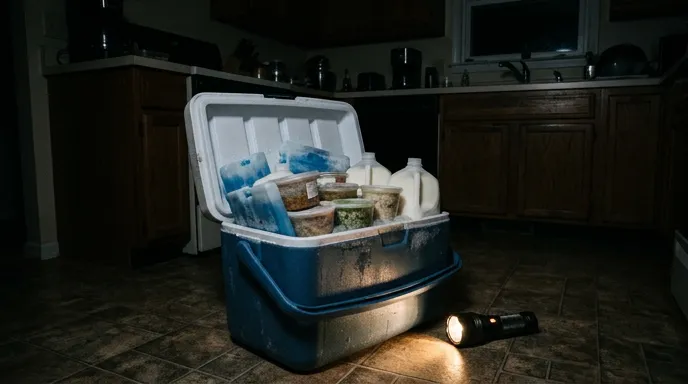
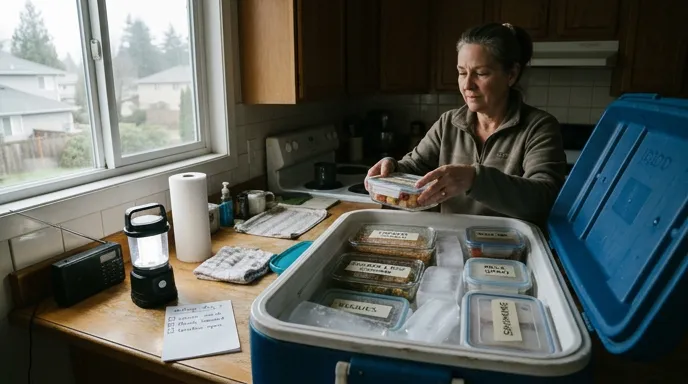
If the outage may last beyond your refrigerator’s safe window, transfer critical perishables to a cooler with block ice or ice packs. Keep the cooler closed and out of direct sun. Handle dry ice with gloves and ventilation; never store it in a sealed room or airtight cooler without venting.
Block ice melts more slowly than cubed ice. Pack empty space with towels to reduce air gaps. Group meat on the bottom and ready-to-eat foods above to limit cross-contamination if melting occurs.
When power returns: what to do next
When electricity is back, check appliance thermometers before restocking. If the refrigerator held above 40°F for more than two hours, discard listed perishables. If the freezer still reads 0°F or foods contain ice crystals, they may be safe to keep or refreeze per guidance above.
Clean surfaces that contacted leaked juices. Reset the refrigerator to 40°F or below and the freezer to 0°F or below before loading new groceries. Run a quick inventory so you know what was lost for insurance or household records if needed.
Who should be extra careful after an outage
People who are pregnant, older adults, young children, or immunocompromised face higher risk from foodborne illness. Households with these members should use stricter discard rules and avoid borderline foods entirely.
Caregivers should communicate clearly: no “just reheat it well” shortcuts for items that sat in the danger zone. When medical advice conflicts with convenience, follow professional guidance and discard questionable food.
Before the next outage: a short prep checklist
- Keep appliance thermometers in the refrigerator and freezer.
- Freeze water containers or gel packs to keep the freezer full.
- Store a cooler, block ice or ice packs, and food-safe gloves.
- Know where dry ice can be purchased locally and how to handle it safely.
- Print or save this discard guide where you can read it without opening the fridge repeatedly.
- Consider a backup power plan for medical devices separately from food cooling.
Calm preparation turns a stressful outage into a series of clear steps: keep doors closed, track time and temperature, use ice if needed, and discard perishables when the 40°F rule says so. You protect your household by planning ahead, not by guessing after the lights go out.