What Still Works When the Grid Goes Quiet
An EMP does not automatically destroy every device you own. Learn which items are most likely to keep working, why some systems are more vulnerable than others, and how to build a practical, low cost preparedness plan around water, light, cooking, transport, and communication.

When people picture an EMP, they often imagine every electronic item failing at once. Reality is more nuanced. The biggest risk is usually to large systems with long conductors, connected infrastructure, and equipment tied into the grid. Small, simple, unplugged, or fully mechanical items are often much more likely to keep working. That matters because good preparedness is less about chasing exotic gear and more about making sure your household can still handle water, food, sanitation, communication, heat, and mobility during a long outage.
This article is general preparedness information, not electrical, medical, or legal advice. For permanent wiring changes, surge devices, generators, or service panel work, use a licensed electrician. If anyone in your home depends on powered medical equipment or refrigeration for medication, talk with your healthcare provider or clinic about a realistic backup plan for extended outages.
What is an EMP, and how realistic is the threat?
EMP stands for electromagnetic pulse, a burst of electromagnetic energy that can disrupt or damage electrical and electronic systems. In preparedness discussions, people often lump together three different problems.
Nuclear EMP, solar storms, and ordinary surges are not the same thing
A high altitude nuclear EMP is a low frequency, high impact scenario often discussed in national security planning. A severe geomagnetic storm, sometimes called a solar storm, is a natural event that can stress the grid, especially long transmission lines. Ordinary lightning and switching surges are much more common and can also damage electronics, but they behave differently from a major EMP event.
The practical takeaway is simple. You do not need to predict the exact cause of a blackout to prepare well. The same household steps that help with storms, cyber outages, and utility failures also help if an EMP or geomagnetic disturbance disrupts power and communications.
Why the grid is a bigger concern than a flashlight in a drawer
Long wires act like collection paths for induced energy. That means transmission lines, antennas, utility infrastructure, and connected systems are generally more exposed than a small device sitting unplugged in a cabinet. This is one reason preparedness planning should focus first on loss of services, not just on whether one gadget survives.
How EMP affects electronics
Not all electronics face the same level of risk. Vulnerability depends on conductor length, shielding, connection to outside wiring, and internal design.
Plugged in versus unplugged
A device connected to wall power, an outdoor antenna, Ethernet, coax, or long charging cables has more pathways for damaging energy to enter. An unplugged item with short internal traces and no long attached wires may be less vulnerable. That does not guarantee survival, but it improves the odds.
Simple versus complex electronics
Fully mechanical tools have no electronics to damage. Analog items and simple battery powered devices may fare better than complex networked systems, especially if stored disconnected. Modern electronics can be surprisingly resilient in some cases, but broad claims are risky. It is better to think in terms of probability, not certainty.
Shielding matters, but it has limits
Metal enclosures can reduce exposure by blocking or redirecting electromagnetic energy. That is the basic idea behind a Faraday container. However, homemade shielding is not magic, and household builds are not a guarantee against every EMP scenario. They are best viewed as a practical risk reduction step for small critical electronics.
What kinds of things are most likely to survive?
The most dependable categories are the ones that do not rely on the grid, long conductors, or sensitive electronics.
| Category | Example item | Likely to survive? | Why | Prep tip |
|---|---|---|---|---|
| Fully mechanical | Hand saw, manual can opener, bicycle | Very likely | No electronics to damage | Maintain, sharpen, and store where you can reach them quickly |
| Non electric household systems | Stored water, gravity filter, wood stove | Very likely | Independent of grid power | Practice using them safely before an emergency |
| Simple unplugged electronics | Flashlight in a drawer, spare radio in storage | Possibly | Short conductors and no active connection reduce risk | Store with batteries removed if appropriate, or place spares in a shielded container |
| Connected home electronics | Router, smart TV, modem, garage opener | Less likely | Attached to house wiring or communication lines | Plan for them to be unavailable |
| Grid dependent infrastructure | Municipal pumps, cell towers, substations | Variable | Large connected systems are more exposed | Build household backups for water, light, and communication |
Household items that would probably still be useful
Most homes already contain more EMP resilient items than people realize. The key is identifying what works without electricity and what can be used safely during a prolonged outage.
Lighting
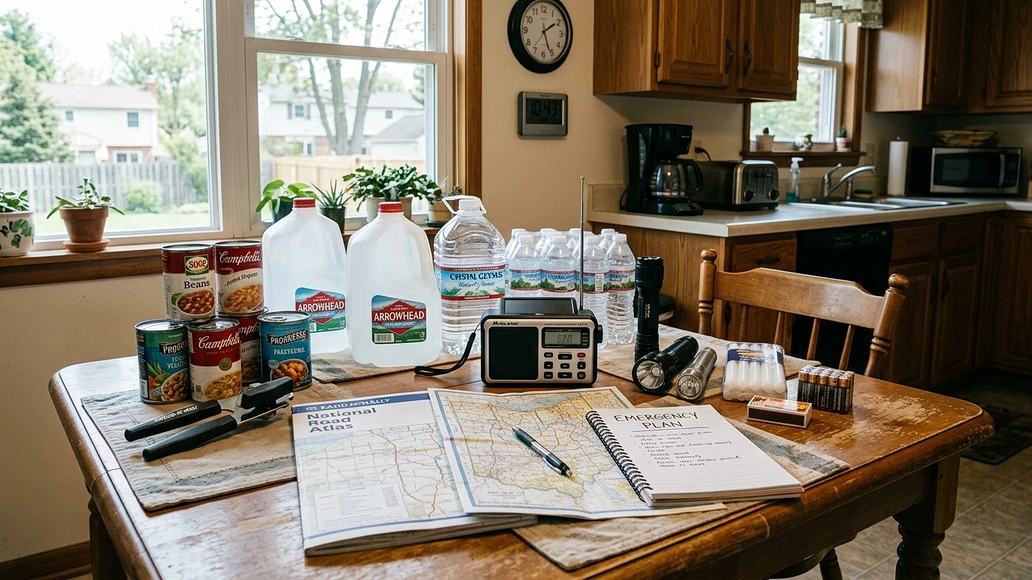
Candles, oil lamps, battery flashlights stored off the charger, headlamps, and crank lanterns are all practical options. Open flame lighting requires extra care around children, pets, curtains, and fuel storage. Battery lights are usually safer for routine indoor use.
Kitchen basics
Manual can openers, hand grinders, non electric coffee makers, cast iron cookware, thermoses, coolers, and paper towels all remain useful. If your kitchen depends heavily on electric appliances, even a few manual substitutes can make a long outage much easier.
Paper systems
Printed maps, notebooks, recipe cards, contact lists, first aid references, and hard copies of important documents do not care whether the internet is down. A small binder with addresses, medication lists, insurance numbers, and emergency contacts is low cost and high value.
Water and sanitation after an EMP
Water is where many households discover how dependent they are on powered systems. Some city systems may continue for a while if they use gravity feed or have backup power, but pressure can drop and treatment or pumping can be interrupted. Wells are often more vulnerable because many rely on electric pumps.
What water sources are more resilient?
| Need | High tech option | Low tech or EMP resilient option | Notes |
|---|---|---|---|
| Drinking water | Electric well pump, municipal supply | Stored water, gravity filter, hand pump where appropriate | Store water first, because treatment gear does not replace volume on hand |
| Sanitation | Normal flush toilet with active water service | Manual flush with stored water, composting toilet, lined emergency toilet setup | Have supplies ready before an outage starts |
| Dish washing | Electric dishwasher | Basins, heated water, biodegradable soap | Use water carefully and maintain hygiene |
| Bathing | Electric water heater and pumped water | Stored wash water, solar shower bag, sponge bath setup | Cleanliness helps prevent illness during long outages |
How long might city water last?
There is no universal answer. Some systems may continue for hours or days, especially if gravity fed or backed by generators. Others may fail quickly. Apartment dwellers in upper floors can lose usable pressure sooner than people at lower elevations. The safe assumption is that tap water may become unreliable without much warning.
Cooking and heating options that do not depend on electronics
Cooking is one of the easiest areas to harden because many non electric options already exist. The important part is using them safely.
What tends to keep working
Camp stoves, charcoal grills, propane stoves with mechanical ignition, wood stoves, rocket stoves, solar ovens, and outdoor fire cooking setups can all remain useful. A manual lighter or matches may matter if your appliance normally uses electric ignition.
Safety matters more than gear count
Never use charcoal grills indoors. Never improvise fuel systems or modify gas appliances. Any combustion device can create fire risk or carbon monoxide danger if used in the wrong place. Follow manufacturer instructions, maintain ventilation, and keep working carbon monoxide alarms where appropriate.
Transportation that is more likely to remain available
Transportation is one of the most debated EMP topics. The safest answer is that low tech transport is the most dependable, while modern vehicle outcomes are less certain.
Older vehicles may have an advantage, but avoid absolute claims
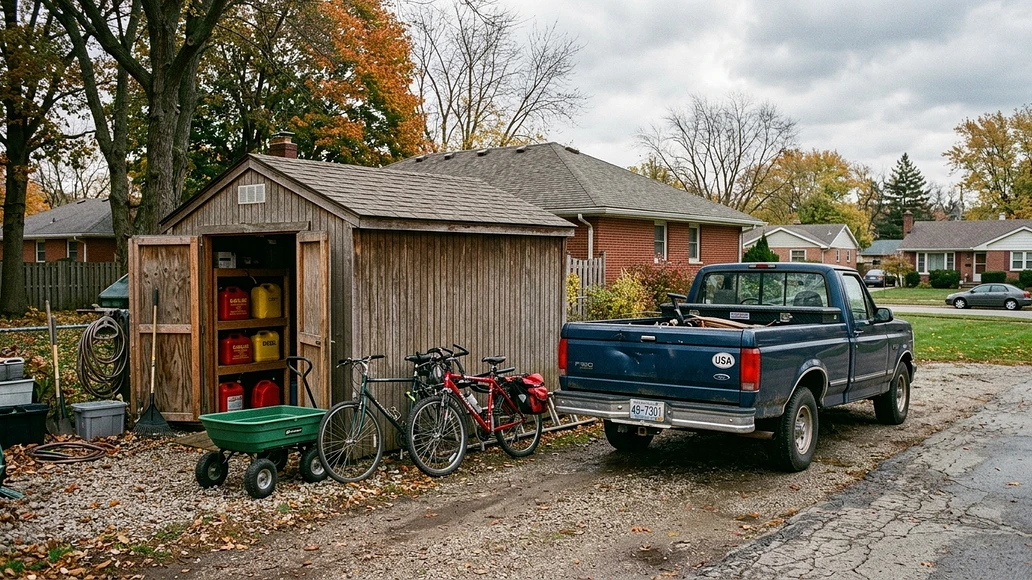
Older vehicles with fewer electronics are often considered more likely to keep running. That is plausible, but it does not mean every old vehicle is immune. Likewise, evidence on modern cars is mixed. Some may stall, some may recover, and some could suffer damage. It is not accurate to say all modern vehicles would be destroyed.
The sure bets are simple
Bicycles, walking shoes, hand carts, wagons, and even a well maintained pair of boots are not glamorous, but they are reliable. If your emergency plan assumes a vehicle will definitely work, it is incomplete.
Electronics you can try to protect in advance
Even if the grid goes down, a few protected electronics can still be valuable for local communication, information, and small scale power use. The goal is not to preserve your whole lifestyle. It is to keep a few critical tools available.
Good candidates for protected storage
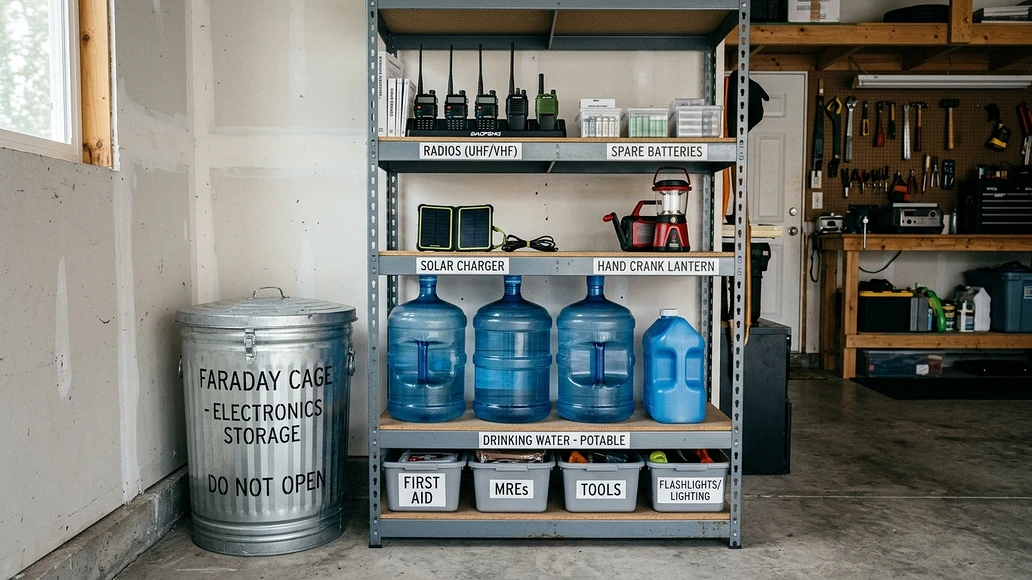
A battery radio, spare walkie talkies, a backup phone with offline maps and documents, rechargeable batteries, a small solar charger, charge cables, a compact LED light, and copies of important files on a USB drive are all reasonable choices. If you use amateur radio, spare handheld gear may also be worth protecting.
How a Faraday container helps
A Faraday enclosure works by surrounding an item with conductive material that helps block or redirect electromagnetic energy. For household use, people often use metal trash cans, ammo cans, or nested metal containers. The electronics inside should be insulated from direct contact with the metal. Tight fitting lids and minimal gaps improve performance, but no DIY setup should be treated as guaranteed protection.
Keep expectations realistic
Protected electronics may survive, but outside systems may not. A spare phone is only partly useful if cell towers are down. A radio is more useful because it can receive information without depending on the local internet. Think in terms of layered resilience, not miracle devices.
Medical and wellness planning deserves special attention
For some households, the real danger in a long outage is not inconvenience. It is interruption of medical support. This is where planning should be personal, calm, and done ahead of time.
| Dependence type | Outage or EMP impact | Who to consult | Practical backup idea |
|---|---|---|---|
| Refrigeration dependent medication | Medication storage may become unsafe if cooling fails | Doctor, pharmacist, clinic | Ask about allowable temperature ranges, backup cooling methods, and refill planning |
| Oxygen concentrator or powered breathing support | Loss of power can become urgent very quickly | Prescribing provider, equipment supplier, utility medical baseline program if available | Discuss backup cylinders, battery options, and relocation plans |
| CPAP | Sleep therapy may be interrupted during outages | Sleep specialist or equipment provider | Ask about battery backup and travel power options |
| Powered wheelchair or scooter | Mobility and charging may be limited | Medical team, equipment provider | Plan charging alternatives and accessible transport support |
This is not the place for device specific medical instructions. If your household depends on powered care, talk with your healthcare team now, before any emergency.
How to make your home more EMP resilient without overspending
The best plan is usually the least dramatic one. Start with all hazards basics, then add a few targeted protections.
Focus first on outage resilience
Water storage, shelf stable food, manual cooking tools, flashlights, sanitation supplies, first aid basics, printed contacts, and a battery radio will help in almost any emergency. These are often more valuable than niche EMP products.
Use surge protection for common threats
Whole house surge protection and point of use surge strips can help with everyday electrical problems such as lightning related surges and utility switching events. They are worth considering, but they are not a guarantee against all EMP effects. Installation of permanent surge devices should be done by a licensed electrician.
Store some critical items unplugged
If you have spare radios, lights, chargers, or backup devices, storing them disconnected and, if possible, in a shielded container is a practical step. It costs little and may improve your odds.
Myths versus reality
| Claim | Reality | Evidence status |
|---|---|---|
| Everything electronic will be destroyed | Some electronics may survive, especially small unplugged items, but connected infrastructure is a bigger concern | Mixed, with strong support for greater risk to long conductors |
| All modern cars will be permanently disabled | Vehicle vulnerability is debated and outcomes may vary | Mixed |
| A homemade Faraday box makes gear invincible | Shielding can reduce risk, but DIY performance is not guaranteed | Plausible general guidance |
| EMP prep is separate from normal emergency prep | The most useful steps overlap heavily with blackout and storm readiness | Well supported |
| You need expensive specialty gear first | Basic water, food, light, sanitation, and communication planning usually matter more | Well supported |
A practical home audit for likely survivors
Walk through your home and ask a simple question for each essential need. If the power is gone for a week, what still works?
| Essential need | What you may already have | Common gap | Low cost improvement |
|---|---|---|---|
| Water | Bottled water, bathtub, cooler | Not enough stored volume | Add dedicated water containers and a gravity filter |
| Light | Flashlights, candles | Dead batteries or too few lights | Add fresh batteries, headlamps, and one lantern per main room |
| Cooking | Outdoor grill, camp stove | No backup fuel or manual ignition | Add safe fuel storage, matches, and simple cookware |
| Food access | Pantry goods | No manual can opener | Keep two manual openers |
| Communication | Cell phones | No way to receive info if networks fail | Add a battery or hand crank radio |
| Sanitation | Toilet and cleaning supplies | No backup if water stops | Prepare an emergency toilet option and hygiene kit |
| Transport | Car | No non fuel backup | Maintain bicycles, walking shoes, and a cart |
Who should plan more carefully?
Most households benefit from basic blackout readiness. A few groups should go further.
People with critical medical needs
If power loss affects breathing support, medication storage, mobility, or essential treatment, your planning should be more detailed and reviewed with professionals.
Apartment dwellers
High rise living can make water access, elevator loss, and cooking restrictions more serious. Focus on stored water, no cook foods, lighting, and a realistic shelter in place plan.
Rural households
Rural homes may have more space and more heating options, but wells, septic systems, and long travel distances can create different vulnerabilities. Water pumping and fuel planning matter more.
Recent context, without the hype
Public concern about EMP and grid threats continues, but there has not been a recent household level change that requires a radically different plan. Utilities and government agencies still focus heavily on grid resilience, geomagnetic disturbance planning, and broader infrastructure security. For families, the core advice remains steady. Prepare for outages first, then add sensible layers for less common but higher impact scenarios.
Frequently asked questions
Will my phone still work after an EMP?
Maybe, but do not count on it. A phone that is unplugged and stored may have a better chance than one connected to power, but even if the phone survives, cell towers and networks may not.
Do EMPs destroy all cars or just some of them?
Not all. Evidence is mixed, and outcomes likely depend on vehicle design, exposure, and the specific event. Older, simpler vehicles are often seen as lower risk, but no vehicle should be assumed guaranteed.
Is a metal trash can really a good Faraday cage for small electronics?
It can be a reasonable low cost option if the contents are insulated from the metal and the lid fits well. It is better viewed as risk reduction, not perfect protection.
How long will city water keep running after a major EMP or grid failure?
It varies widely. Some systems may continue briefly due to gravity feed or backup power. Others may lose pressure quickly. Store water in advance rather than assuming service will last.
Should I buy special EMP proof gear, or just focus on basic emergency supplies?
Start with basic supplies. Water, food, sanitation, light, communication, and medical planning help in far more situations. After that, protecting a few small electronics in a shielded container can make sense.